


Plant Identification Techniques
- Rhidian Maltby
- May 26, 2025
- 3 min read

Identifying plants will be part of my EPA, so getting to know the Genus, Species and sometimes Variety or Cultivar of the main plants, trees and shrubs on the college grounds is very important.
My class mates and me deiced to make this a little easier for ourselves by making a list of some of the plants on site, then make some QR codes to be attached to the corresponding plant. I used an app on my phone called Plantnet, which can identify a plant from a photo, these are not always 100% accurate, but we were able to identify them using all of our knowledge along with some assistance from Tom.


This list was taken back to the classroom where we used a QR creating website to link these plants to the RHS website, for example: https://www.rhs.org.uk/plants/99417/fagus-sylvatica-purpurea-tricolor-(v)/details
After printing these QR codes out, we laminated them, and punched holes in the sheets so that we can attached to the plants.

Now that these are attached to the plants at college, we can use any spare time we have when at college to revise and learn about these plants.
During the course of the day, we can across some other useful and interesting things, for example, there is a Fagus sylvatica 'Asplenifolia' (Cut-leaf beech), this is a cultivar of a Common Beech, but with much longer and serate leaves. What we noticed about this tree was that it is trying to revert to the common form with an ovate leaf shape. We will remove these reverted shoots and branches to keep the new cultivar characteristics.

We also found some pest and disease on some of the plants, see below for details of what we found.
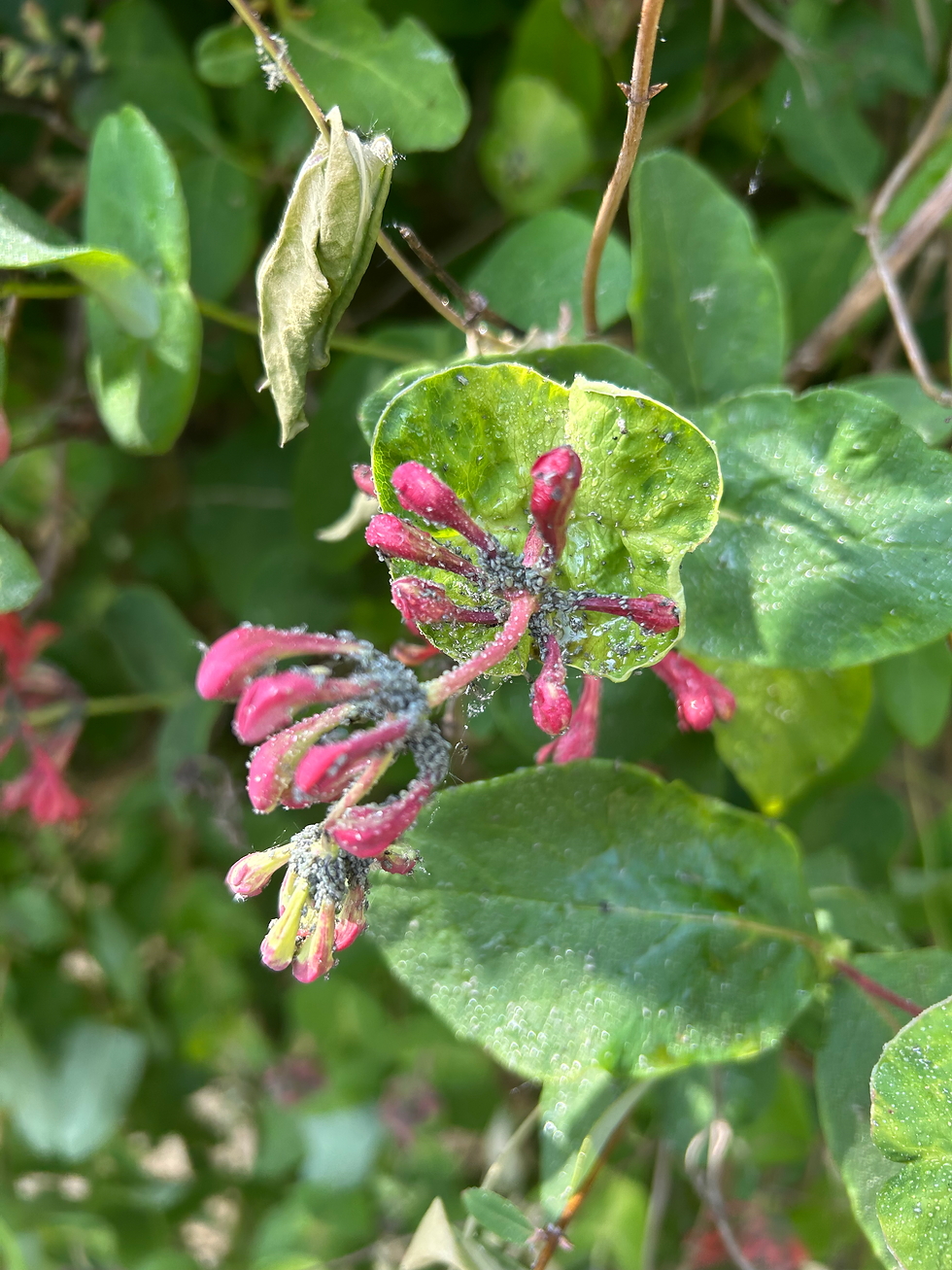
Overwintering:
Honeysuckle aphids overwinter as eggs on the host plant.
Spring Hatching:
The eggs hatch in spring, and the first generation of aphids feeds on newly developing leaves.
Summer Reproduction:
Throughout the summer, numerous generations of aphids are produced, with all aphids being female and reproducing asexually.
Fall:
In the fall, winged and wingless adults are produced, and the females deposit overwintering eggs.
Appearance:
Honeysuckle aphids are small, soft-bodied, and pear-shaped, typically ranging from cream to pale green in color. They have very short cornicles and are sometimes described as manatee-shaped.
Damage and Symptoms:
Curled and Dwarfed Leaves:
Feeding by honeysuckle aphids leads to curled and dwarfed leaves, a common symptom of aphid damage.
Stunted Growth:
Salivary secretions from the aphids can cause stunting of both leaf and stem growth.
Witches' Brooms:
As the season progresses, damage can involve several inches of the branch, resulting in small, weakened side shoots called witches' brooms.
Brown and Dead Tips:
In autumn, the leaves on the witches' brooms usually turn brown and die before the plant produces its fall color.
Control and Management:
Natural Predators: Encourage natural predators like ladybugs, ground beetles, hoverflies, parasitoid wasps, and earwigs, as they can help control aphid populations.
Water Spray: Blast aphids away with a strong water spray.
Pruning: Prune out severely infested shoots.
Systemic Insecticides: Consider using systemic insecticides as a last resort, but be sure to read the label for proper application methods.
Natural Enemies: Some natural enemies of aphids can be purchased as biological control for use in greenhouses.
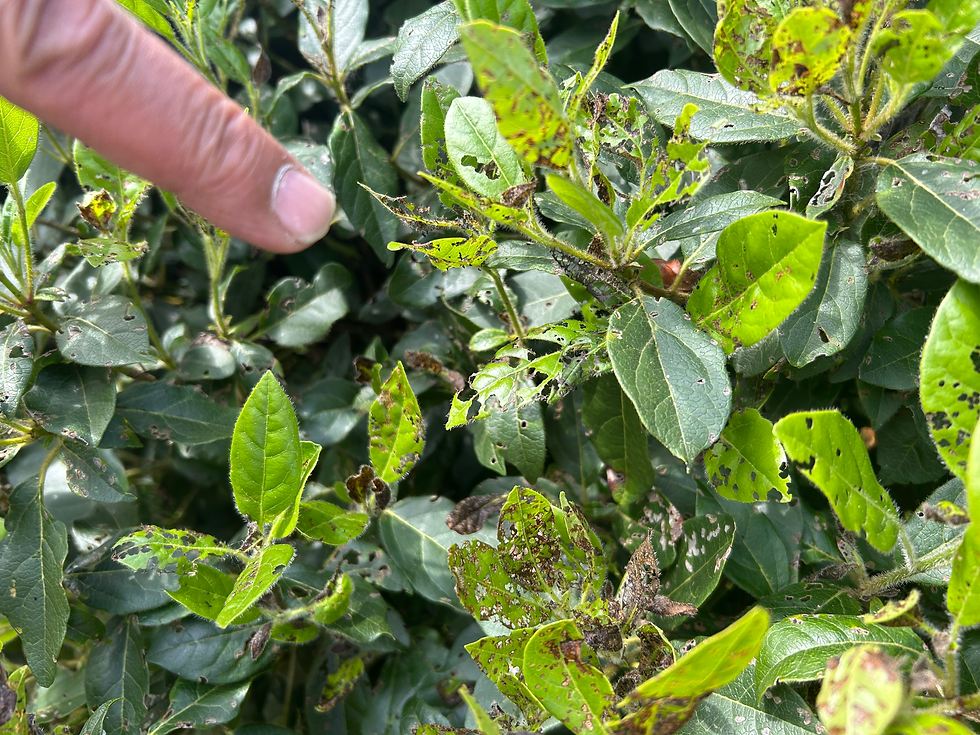
Viburnum Leaf Beetles:
These beetles are a common pest of viburnums, with their larvae being the primary culprits of leaf damage.
Larval Feeding:
The larvae chew holes in the leaves, often between the main veins, creating a "lace-like" or skeletonized appearance.
Adult Feeding:
Adult beetles also feed on the leaves, but their damage is typically less severe than that caused by the larvae.
Symptoms:
Look for holes in the leaves, a "lace-like" or skeletonized appearance, and discolored edges on the leaves.
Heavy Infestations:
Severe infestations, especially on Viburnum tinus, can cause significant leaf damage, making the plant unsightly, especially since it's an evergreen.
Control:
Controlling the viburnum leaf beetle can involve removing eggs from twigs, removing and destroying larvae, and using insecticides as a last resort.
Resistant Species:
Some viburnum species are more resistant to viburnum leaf beetles, such as Viburnum carlesii, V. plicatum, and V. x juddii.
Natural Predators:
Encouraging natural predators like ladybugs, assassin bugs, and lacewings can also help control the beetle population.
This was a very useful day at college, and hopefully we will get the chance to create some more QR codes for more plants in the near future.


Comments